 vngame8
 KILLMARK:SAND DEATH
One of the two killmark styles the scene circulated most widely.
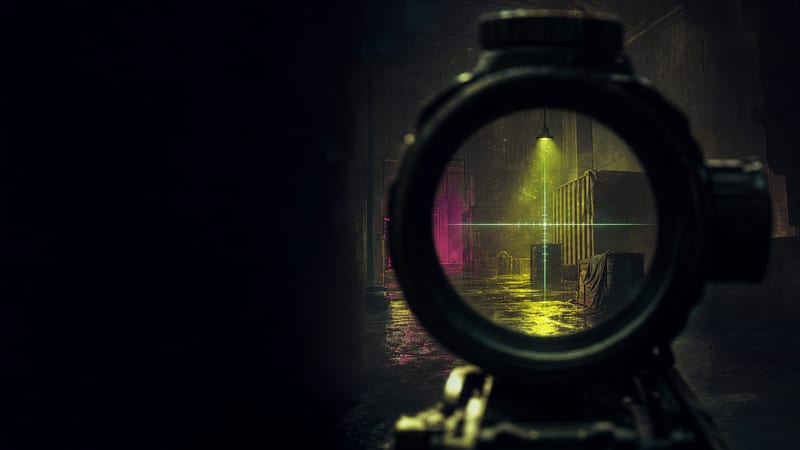
Sand Death is one of two killmark styles that recur across the entire Đột Kích record, and of the two it is the one that reads most clearly at the size a killmark actually appeared. That is not a coincidence, and it is most of the explanation for why it spread.
The constraint the style was solving
A killmark appeared for a moment, small, in the middle of a firefight, on a monitor that in most cases was an ageing internet-café panel. Whatever it showed had to survive all of that. Fine linework disappeared. Gradients turned to mud. Anything relying on colour separation failed on a badly calibrated screen.
What survived was heavy silhouette work: large solid shapes with a lot of contrast between them and nothing that needed to be resolved to be understood. Sand Death is that approach taken about as far as it goes.
How it spread, and how fast
The record shows the style going from scarce to common inside a few months. That trajectory is the opposite of how scarcity usually works, and it happened because the files were free. Anything valuable was copied immediately, and copying was what destroyed the value.
Nine backlink rows point at Sand Death pages. That is a small number in absolute terms and a notable one for a single cosmetic file, and it says that people were searching for this specific style by name instead of browsing for killmarks generally.
What the name refers to
The record does not establish where the name came from. It appears fully formed in the earliest listings that mention it, with no explanation, which is normal for this material — these were forum posts and file bundles; nobody involved was documenting anything. Whether Sand Death described the visual, referenced something in the game, or was simply what the first person to upload it typed is not recoverable.
Variant spellings are rarer here than in the Commando Special cluster, where the naming drifted badly. Two words that are both ordinary English survive copying better than a misspelling does.
What replaced it
Once a style was universal it stopped doing the job it was adopted for. A mark everyone has says nothing about the person using it, and the record shows attention moving on — later listings in the Đột Kích cluster advertise variety instead of any specific style, offering bundles of dozens instead of naming one.
That shift is visible in the backlink pattern too. The pages linked from outside are the ones naming individual styles; the later bundle pages attracted almost nothing. A file worth searching for by name had to be scarce, and the scene destroyed scarcity as fast as it created it.
One practical note for anyone tracing this style further: the surviving references are almost all secondary. The pages that linked to Sand Death files were aggregators and forum threads, and the file hosts they pointed at are gone. Anything reconstructed about the original is being reconstructed from descriptions of it.
That is a real limit on what this page can say. It can establish that a style called Sand Death circulated widely, roughly when, and that its heavy silhouette is the reason it survived scaling. It cannot show the file, verify that every reference to the name meant the same artwork, or say who drew it. Each of those would need the files themselves.
Why a single skin has its own record
Because the links point here, and because the style is a clean example of a general point. Every visual convention in this scene was shaped by the conditions it had to work in: shared hardware, bad monitors, no bandwidth to spare. The killmarks that lasted are the ones that solved that problem, and looking at which ones lasted tells you more about the conditions than about anyone's taste.
The visual reference on this page is an original drawing in the same register: flat, blunt, high contrast. The original files are third-party game assets and are not reproduced here. What is worth documenting is the shape of the solution; the specific bytes that implemented it are not the point.